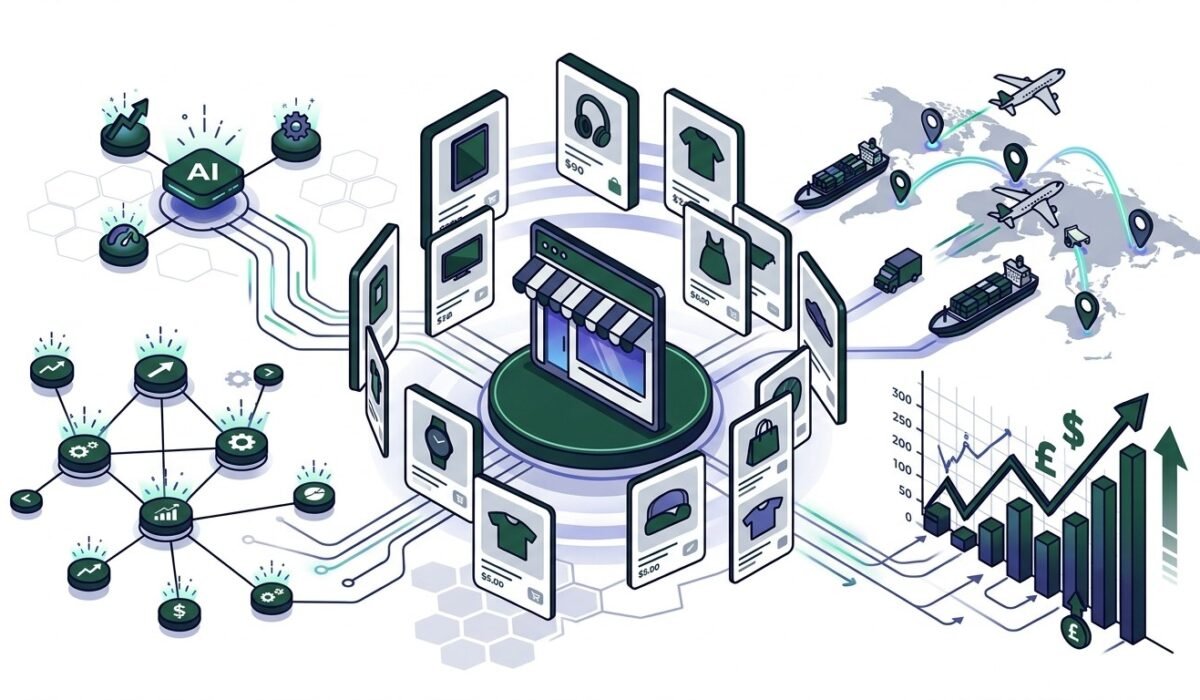
Dropshipping with AI uses artificial intelligence tools to automate product research, generate viral video ads, write high-converting Shopify product pages, and automate supplier order fulfillment. In 2026, AI dropshippers use tools like AutoDS, ShopHunter, CapCut AI, and Claude to launch niche stores in under 4 hours, test 10 products a week, and maintain 25% to 35% net profit margins without holding inventory.
Traditional dropshipping developed a terrible reputation over the last five years: slow 3-week shipping from random overseas warehouses, low-quality generic products, and aggressive ad spend on unprofitable Facebook campaigns. Most beginners burned $2,000 on ads before making a single profitable sale.
In 2026, the dropshipping model has been completely rebuilt by artificial intelligence. Modern operators do not manually browse AliExpress for hours. They use AI scrapers to spot trending products on TikTok before they peak, generate 20 variations of high-converting video ads in minutes, and connect to automated domestic supplier networks with 3-day shipping.
This guide explains how automated AI dropshipping actually works, the exact software stack to use, and how to build a sustainable e-commerce business that generates consistent profits.
Summary at a glance
- ✓
AI Product Discovery: Software like ShopHunter and Minea tracks sales velocity across thousands of Shopify stores to spot winning products in real time. - ✓
Fast Video Ad Production: AI video generators turn raw supplier clips into viral TikTok and Instagram Reels ad creative in under 5 minutes. - ✓
Automated Order Fulfillment: Cloud platforms like AutoDS and CJ Dropshipping automatically sync tracking numbers and route orders to local warehouses. - ✓
Unit Economics Discipline: Target products with at least a 3x markup ($15 wholesale cost sold for $45+) to leave room for ad costs.
Traditional Dropshipping vs. AI-Powered Dropshipping
Understanding the difference between the old manual way and the automated AI workflow is critical for maintaining healthy profit margins:
| Operational Stage | Old Manual Method | 2026 AI Dropshipping | Efficiency Gain |
|---|---|---|---|
| Product Research | Manual browsing, 10+ hours/week | Automated sales velocity scrapers | 90% faster validation |
| Copy & Product Pages | Generic supplier bullet points | AI high-converting landing copy | 2.5x higher conversion rate |
| Ad Creative Creation | Filming physical products ($200/ad) | Generative video & AI voiceover | $0 per creative variation |
| Order Fulfillment | Manual copy-pasting customer details | 100% automated API sync | Zero manual labor |
| Customer Support | Slow email replies, high refund rate | 24/7 AI chatbot order lookup | 80% instant resolution |
Step 1: Finding High-Margin Winning Products with AI
The foundation of a successful dropshipping store is product selection. If a product is saturated, fragile, or available at the local Walmart for $5, no amount of marketing will make it profitable.
Three criteria for high-probability dropshipping products in 2026:
1. Problem-Solving Utility: Products that solve an active annoyance (e.g., orthopedic seat cushions for office workers, pet grooming vacuums, smart car windshield repair kits). Problem-solving products trigger immediate impulse purchases.
2. Visual Wow Factor: Products with a distinct visual transformation that can be demonstrated in the first 3 seconds of a TikTok video.
3. 3x Minimum Markup Margin: If the supplier cost is $12 (including shipping), you must be able to sell the item for at least $39 to $49. This leaves $15 for advertising cost per purchase and generates $12 to $22 in clean net profit per unit.
Use AI research platforms like Minea or ShopHunter to filter products with over 50,000 views and positive ad spend momentum in the last 7 days.
Step 2: Building Your AI-Powered Shopify Storefront
You do not need a graphic designer to build a high-converting e-commerce store. In 2026, AI tools generate complete branded stores in minutes.
1. Store Setup: Create a Shopify account and install a clean, minimal mobile-optimized theme like Dawn or Sense.
2. Product Descriptions: Use Claude or ChatGPT to write high-converting product descriptions. Prompt the AI: “Write a direct-response product page for [Product Name]. Include a bold hook, 4 benefit bullets addressing customer pain points, technical specs, and a 30-day money-back guarantee section.”
3. AI Reviews and Social Proof: Import verified customer reviews with photos using Loox or Judge.me. Ensure customer testimonials highlight shipping speed, product durability, and ease of use.
4. AI Customer Service Chatbot: Install an AI customer service widget like Tidio or Gorgias AI. The bot automatically answers common questions: “Where is my order?”, “How long does shipping take?”, and “What is your refund policy?” by querying Shopify tracking numbers in real time.
Step 3: Generating Viral Video Ads with AI
Paid traffic is the growth engine of e-commerce. Winning e-commerce brands test 10 to 20 video ad variations every week to find top-performing hooks.
The 4-step AI video ad generation workflow:
- Script Generation: Use Claude to write 5 distinct 15-second TikTok ad scripts using different psychological hooks: Problem/Agitation, Before/After, Unboxing Reaction, and Competitor Comparison.
- Video Assembly: Use CapCut or InVideo AI to combine raw supplier clips, add dynamic auto-captions, and overlay trending royalty-free sound tracks.
- AI Voiceover: Add an energetic, natural-sounding AI voiceover using ElevenLabs or CapCut text-to-speech to narrate the hook.
- Ad Creative Variations: Generate banner and story image variations using tools from our guide on the best AI marketing tools.
Step 4: Automated Supplier Fulfillment
Never manually order products one by one. Use an automated fulfillment system to route orders directly from your Shopify store to verified suppliers.
Leading fulfillment automation platforms:
- AutoDS: Automatically monitors supplier inventory levels, adjusts store pricing when supplier costs change, and fulfills orders instantly upon customer checkout.
- CJ Dropshipping: Provides access to US and European local warehouses, custom branded packaging, and 3 to 7 day delivery times.
- Zendrop: US-based fulfillment network that eliminates long shipping delays and handles returns smoothly.
Unit Economics Breakdown of an AI Dropshipping Store
Here is what realistic financial unit economics look like for an automated dropshipping store generating $15,000 per month in revenue:
- Retail Price per Unit: $49.00
- Cost of Goods Sold (COGS + Shipping): $14.00 (28.5%)
- Customer Acquisition Cost (TikTok / Meta Ads): $18.00 (36.7%)
- Payment Processing & Software Fees: $2.50 (5.1%)
- Net Profit per Unit: $14.50 (29.6% Net Margin)
At 300 orders per month (10 sales per day), this generates $4,350 in clean monthly net profit requiring approximately 5 hours of weekly oversight.
For more ways to generate online revenue while keeping your day job, read our complete guide on how to make extra income while working full time, explore how to start a SaaS business, or check out our guide on AI tools for freelancers.
FAQ: Dropshipping with AI
How much money do I need to start AI dropshipping?
You need $300 to $500 to start. This covers your Shopify plan ($1 for your first month), a custom domain name ($14/year), and $200 to $400 in initial ad testing budget on TikTok or Meta Ads. Software tools like Claude and CapCut offer free tiers for beginners.
Is dropshipping still profitable in 2026?
Yes, but only for operators using automated tools, fast domestic shipping suppliers, and original video content. The old model of slow shipping and copy-pasted AliExpress listings is dead. Stores using AI video ads and 4-day shipping continue to generate healthy 20% to 35% net profit margins.
Which ad platform is best for dropshipping in 2026?
TikTok Ads and Meta Ads (Instagram Reels) are the most effective channels for impulse-buy consumer products. TikTok excels at fast organic virality and low cost-per-click, while Meta Ads provides superior retargeting and higher average order values.
Do I need to buy inventory upfront?
No. In dropshipping, you only purchase the item from your supplier after a customer pays for it on your website. Your supplier packs and ships the item directly to the customer, meaning you never hold unsold physical inventory.
How much time does it take to run an AI dropshipping store?
Setting up your store and testing your first product takes 4 to 8 hours. Once automated with tools like AutoDS and Tidio AI, managing orders, monitoring ad metrics, and answering customer tickets takes 1 to 2 hours per day.
The Bottom Line
AI dropshipping is one of the most accessible e-commerce models in 2026 because software handles the operational heavy lifting. You do not need to pack boxes, manage inventory, or hire customer support agents to build a profitable store.
Pick one problem-solving product with 3x markup potential, generate 5 viral video ad angles using AI, set up automated supplier fulfillment, and launch a test campaign this weekend.
Explore the full Make Money Online and Business hubs on Musaholic Magazine for more e-commerce strategies, software benchmarks, and digital income guides.