
To start a digital agency in 2026, pick one core service (SEO, paid ads, social media, or web design), register as an LLC, build a 3-piece portfolio using spec work or discounted client projects, set retainer pricing between $1,500 and $5,000 per month, and get your first 3 clients through LinkedIn outreach and warm referrals. Most solo agencies reach $10,000 per month within 6 to 12 months. The biggest mistake is offering every service at once before landing a single case study.
Starting a digital agency is one of the fastest ways to build a six-figure income without a product, warehouse, or outside investment. You bill clients monthly for services that compound in value over time. Your overhead is a laptop, a few SaaS subscriptions, and your own expertise.
But most people who try it fail in the first year, and the reason is almost always the same: they try to be a full-service agency before they have even one strong case study. This guide skips the theory and gives you the exact steps that work in 2026.
Summary at a glance
- ✓
Start narrow: Agencies that specialize in one service grow 3x faster than generalists. Pick SEO, paid ads, social media, or web design — not all four at once. - ✓
Retainer model wins: Monthly retainers of $1,500 to $5,000 per client beat project work for predictable income. 10 clients at $2,000 per month is a $ 240,000-per-year business. - ✓
First clients come from outreach: 80% of new agencies land their first 3 clients through LinkedIn DMs or warm referrals, not inbound marketing. - ✓
AI cuts your cost base: Tools like Claude, Jasper, and Surfer SEO let a solo operator deliver work that previously required a 3-person team.
What Type of Digital Agency Should You Start?
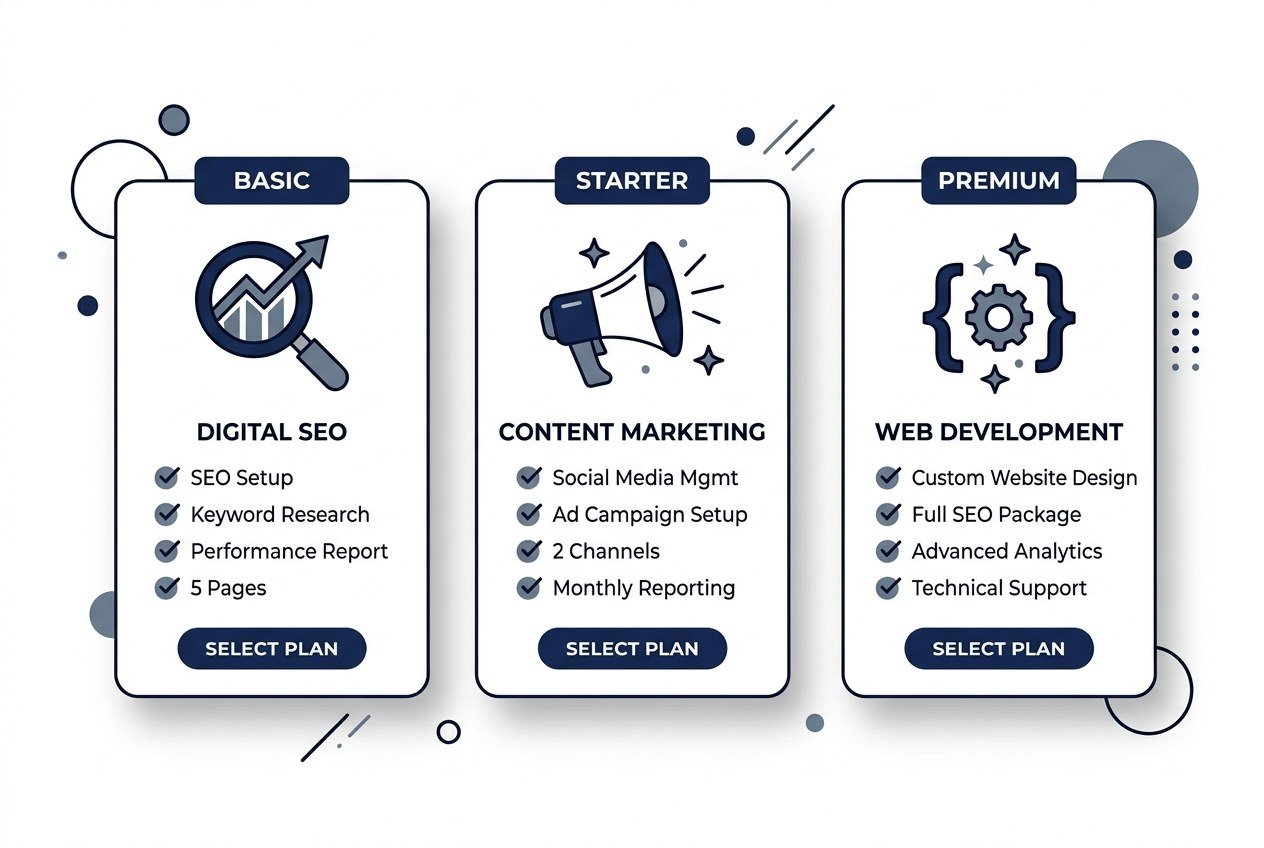
Every successful agency starts as one thing done exceptionally well. The four most profitable niches for a new agency in 2026 are:
| Agency Type | Avg Retainer | Time to First Client | Best For |
|---|---|---|---|
| SEO Agency | $1,500 – $5,000/mo | 3 – 6 weeks | Writers, technical marketers |
| Paid Ads Agency | $2,000 – $8,000/mo | 2 – 4 weeks | Analytical, data-driven founders |
| Social Media Agency | $800 – $3,000/mo | 1 – 2 weeks | Content creators, designers |
| Web Design Agency | $3,000 – $15,000/project | 4 – 8 weeks | Developers, UI/UX designers |
Paid ads agencies have the highest early-stage earning potential because results are fast and measurable. SEO agencies build the deepest client relationships because results compound over 12 to 24 months. Pick based on your existing skill set, not on which pays most.
Step 1: Pick Your Niche Within the Service
Service type is only the first layer. The second layer is industry niche. An agency that serves “all businesses” loses every proposal to one that serves “e-commerce brands on Shopify.” Specificity builds trust faster.
Strong niche combinations in 2026:
- SEO for SaaS companies (high CPC industries, clients have real budget)
- Meta Ads for local service businesses (dentists, chiropractors, med spas)
- Social media management for real estate agents
- Web design for coaches and online course creators
Pick a niche where you have existing connections, previous work experience, or genuine interest. You will be talking to these clients every week for years.
Step 2: Register the Business and Set Up Finances
Skip this step and you will regret it the moment you land your first client. Set up your business structure before sending a single proposal.
LLC formation: In the US, register an LLC through your state’s Secretary of State website. Costs range from $50 to $500, depending on the state. Use LegalZoom or Incfile if you want it handled for $150 to $200 total, including state fees.
Business banking: Open a separate business checking account immediately. Mercury Bank is free and takes about 10 minutes to set up online. Never mix personal and business funds.
Contracts: Use a Master Service Agreement for every client. Download a free template from Bonsai and customize it. Key clauses: net-7 payment terms, IP ownership, 30-day termination notice, and scope of work definition.
Invoicing: Stripe is the standard for agency recurring billing. Set up automatic retainer charges from day one. Late invoices kill cash flow faster than client churn.
Step 3: Build Your Portfolio Before You Have Clients
The oldest catch-22 in freelancing: clients want a portfolio, but you need clients to build one. Three ways to break the loop fast:
Option 1 — Spec work: Pick 3 real businesses in your niche. Run a mock audit or build a sample strategy. Present it as a process showcase. Be honest about what it is.
Option 2 — Discounted first engagement: Offer one client your service at 50% off for 90 days in exchange for a case study and testimonial. This is a real paying relationship from day one.
Option 3 — Pro bono for a non-profit: Offer your service free to a local charity for 60 days. You get a real case study with verifiable results. Pick an organization with an active website so results show up clearly.
Three solid portfolio pieces are enough to win your first paid client. You do not need ten.
Step 4: Set Your Pricing
New agency owners consistently underprice because they anchor to their old hourly rate as an employee. Agency pricing is based on market rates and outcomes, not hours worked.
Standard retainer benchmarks for 2026:
- SEO retainer: $1,500 to $3,000/month for small businesses, $3,000 to $8,000 for mid-market
- Meta or Google Ads management: 10 to 15% of ad spend with a $1,000/month minimum
- Social media management (3 platforms, 12 posts/month): $1,200 to $2,500/month
- Website design: $3,000 to $8,000 for a 5 to 8 page site, $8,000 to $25,000 for e-commerce
Always add a one-time onboarding fee of $500 to $1,500 on any retainer. It covers the heavier setup work in month one. Clients who pay an onboarding fee churn at half the rate of those who skip it.
Step 5: Land Your First 3 Clients
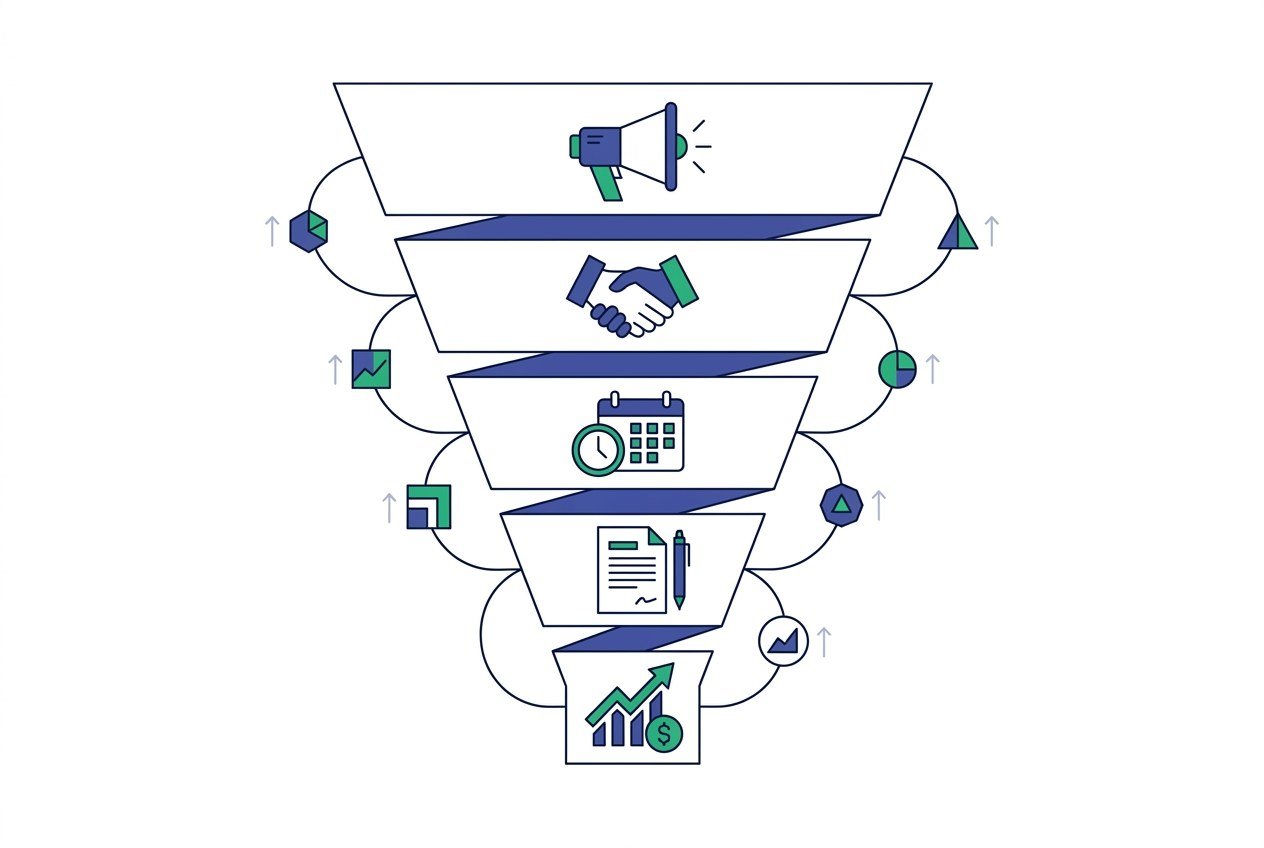
Most new agencies overthink lead generation. The answer at the start is simple: reach out directly to people you already know or can contact personally.
LinkedIn is your primary B2B channel. Optimize your profile to state clearly what you do and who you serve. Then send 10 personalized connection requests daily to business owners in your niche. Do not pitch in the first message. Lead with a specific observation about their business instead.
A message that works: “Hi [Name], I noticed your Google Ads are running traffic to a page with no lead form. I help [niche] businesses fix exactly this. Would a 15-minute audit call be useful?” Specific, relevant, and low-commitment to respond to.
Referrals come next. Email every former colleague and professional contact. Tell them what you are doing and what type of client you are looking for. Ask directly if they know anyone. Most say no, but the one who says yes often becomes your best long-term client.
Target 3 signed clients within your first 60 days. At $2,000 each that is $6,000 per month, enough to cover costs and prove the model before you invest further.
Step 6: Scale with Systems and AI Tools
Once you have 3 to 5 clients, operational load becomes the growth blocker. The founders who push past $20,000 per month are the ones who systematize delivery early.
The core tech stack for a lean agency in 2026:
- Project management: ClickUp or Notion ($0 to $20/month) for client deliverables and timelines
- Reporting: AgencyAnalytics or Looker Studio for automated weekly client dashboards
- AI assistance: Claude or ChatGPT for drafting, Surfer SEO for optimization, Perplexity for research
- Client communication: Loom for async video updates, Slack for team coordination
- Billing: Stripe or FreshBooks for automated retainer collection
Your first hire should be a part-time contractor for whatever task consumes most of your time. If you run an SEO agency, hire a writer on Upwork. Keep your role as the strategist and client relationship owner. Revenue growth becomes manageable the moment you only do the work you are genuinely best at.
For more ways to build scalable income businesses, read our guide on becoming a freelance SEO consultant or explore the full Make Money Online hub for more proven models.
FAQ: Starting a Digital Agency
How much money do I need to start a digital agency?
Under $500 to launch. You need LLC registration ($50 to $200), a basic website ($0 to $15/month), and your core SaaS tools ($50 to $100/month). Most costs come after you have paying clients, not before.
Do I need a degree or certification to start a digital agency?
No. Clients care about results, not credentials. That said, a Google Ads certification (free), Meta Blueprint certification (free), or HubSpot content marketing certificate (free) adds real credibility on proposals. Get certified in your core service area before your first sales call.
How long does it take to make $10,000 per month?
Most founders who start with a clear niche, direct outreach, and retainer pricing reach $10,000 per month within 6 to 12 months. Five clients at $2,000 each is the typical milestone. Consistency in outreach during the first 90 days is the main variable.
Should I freelance first or go straight to building an agency?
Start as a freelancer under your own name, then transition to an agency brand once you reach 3 to 4 clients and need to subcontract. Many successful agency owners run solo for 12 to 18 months before hiring. The agency structure matters operationally, not on day one.
What is the biggest mistake new digital agency owners make?
Taking on any client just to have revenue. Clients paying $300 per month demand the same time and energy as those paying $3,000. They leave faster, complain more, and block the agency from growing. Set a minimum retainer and hold to it from your second client onward.
The Bottom Line
A digital agency is still one of the cleanest business models available. Low startup cost, recurring revenue, no inventory, and a skill set every business in the world needs. The playbook is straightforward: one service, one niche, direct outreach, retainer pricing, and a case study as fast as possible.
Founders who stall spend three months building a logo and website before speaking to a single prospect. Your agency becomes real the moment you send the first proposal. Start there.
Explore the full Business category for more models, strategies, and step-by-step guides published weekly on Musaholic Magazine.