
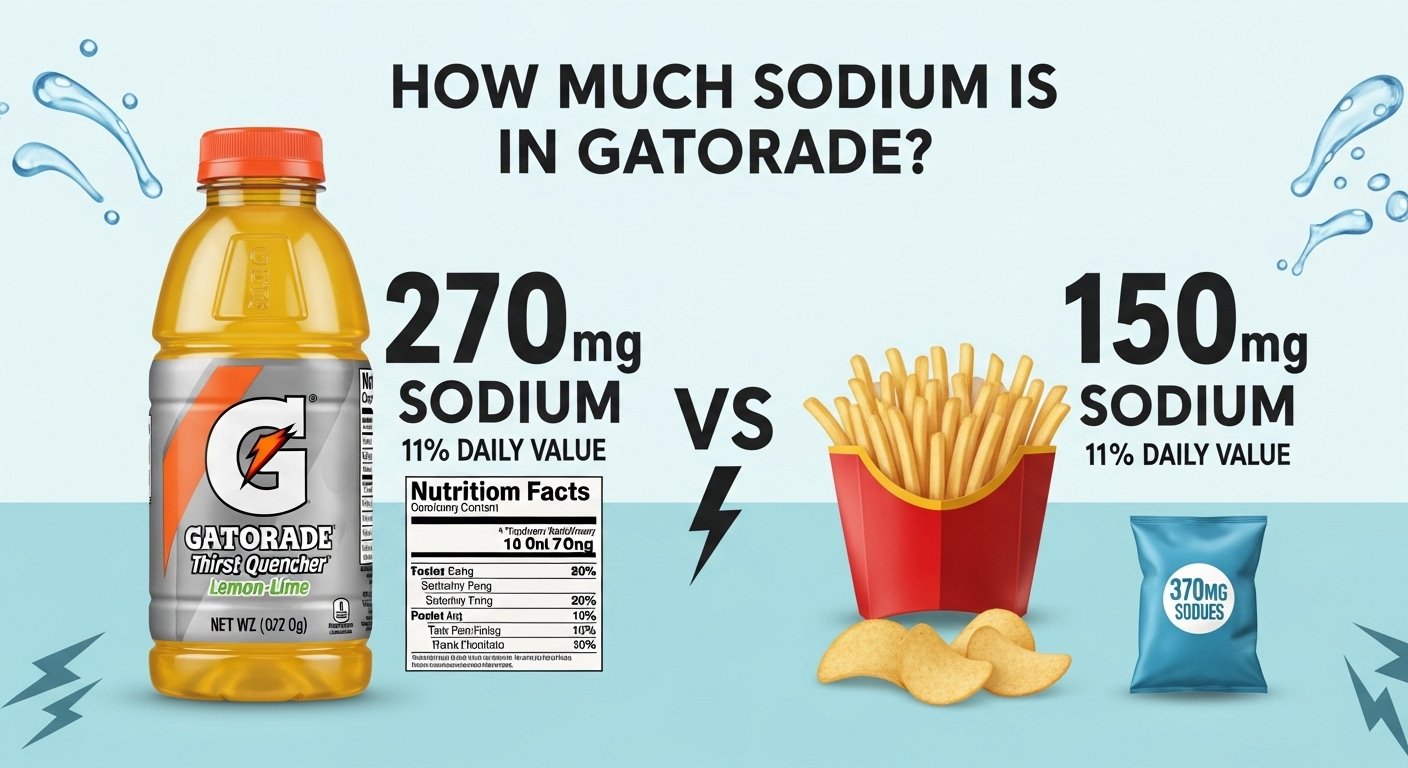
Gatorade has become a staple for athletes, fitness enthusiasts, and even casual drinkers looking to hydrate. With its vibrant colors and bold flavors, it’s hard not to be drawn in by this iconic sports beverage. But have you ever stopped to think about what’s really inside that bottle? One of the key ingredients is sodium—a mineral often associated with hydration but also sometimes linked to health risks.
Understanding how much sodium is in Gatorade can make a significant difference in your performance and overall health. Whether you’re hitting the gym or cheering from the sidelines, knowing what you’re consuming helps you stay informed and at your best. Let’s dive into all things Gatorade: the role of sodium, recommended intake levels, flavor breakdowns, health impacts, and some alternative options for those who might want to skip higher sodium drinks altogether.
The role of sodium in sports drinks
Sodium plays a crucial role in sports drinks, acting as an essential electrolyte. It helps regulate fluid balance in the body, which is vital during intense physical activity.
When you sweat, your body loses not only water but also electrolytes like sodium. This loss can lead to dehydration and decreased performance if not replenished promptly.
By including sodium in their formulations, sports drinks like Gatorade help athletes maintain optimal hydration levels. This replenishment aids muscle function and prevents cramps that can hinder performance.
Moreover, sodium enhances the absorption of fluids in the intestines. This means that when consumed during or after exercise, it promotes quicker rehydration compared to plain water.
Athletes often rely on these benefits to sustain endurance and energy throughout strenuous activities. Understanding this vital component ensures better choices for effective hydration strategies.
Recommended daily sodium intake
The recommended daily sodium intake varies based on age, health status, and activity level. For most adults, the guidelines suggest limiting sodium to about 2,300 milligrams per day. This amount is roughly equivalent to one teaspoon of salt.
However, for individuals with high blood pressure or certain medical conditions, a lower limit of around 1,500 milligrams is often advised. These recommendations aim to support cardiovascular health and overall well-being.
Active individuals or athletes may require higher levels due to sweat loss during physical exertion. In these scenarios, adjusting sodium intake can be essential for maintaining electrolyte balance and hydration.
Monitoring your sodium consumption helps ensure you meet your body’s needs without overdoing it. Awareness of both dietary sources and sports drinks like Gatorade can play a crucial role in this balance.
Sodium content in different flavors of Gatorade
Gatorade offers a variety of flavors, each with its distinct taste and sodium content. The classic Lemon-Lime flavor packs around 110 mg of sodium per 8-ounce serving. This option is often favored for its refreshing zest.
On the other hand, Fruit Punch brings a bolder taste profile while containing similar sodium levels. With about 160 mg of sodium in an equivalent serving size, it appeals to those who enjoy sweeter beverages during workouts.
For enthusiasts looking for something different, the Glacier Freeze variant provides about 120 mg of sodium per serving. Its icy coolness makes it popular among athletes who need hydration without overwhelming sweetness.
Each flavor not only delivers electrolytes but also caters to varying preferences. It’s essential to check labels as these values can shift slightly based on packaging or regional variations, ensuring you stay informed on your intake while enjoying your favorite Gatorade flavor.
Impact of excessive sodium intake on health
Excessive sodium intake can lead to various health issues, particularly concerning heart health. High levels of sodium cause the body to retain water, which increases blood volume. This can elevate blood pressure and strain the cardiovascular system.
Moreover, long-term high sodium consumption is linked to an increased risk of stroke and heart disease. The kidneys may also struggle to filter out excess salt, leading to potential kidney damage over time.
In addition, some studies suggest that too much sodium could contribute to osteoporosis by promoting calcium loss through urine. This puts bones at risk for fractures and weakening.
It’s essential for individuals who are active or consume sports drinks like Gatorade to monitor their total daily sodium intake carefully. Awareness plays a crucial role in maintaining a balanced diet while supporting athletic performance without compromising overall health.
Alternatives to high-sodium sports drinks
If you’re looking to hydrate without the high sodium content, plenty of alternatives exist. Coconut water is a fantastic choice. It’s packed with electrolytes and has a naturally sweet flavor that many enjoy.
Another option is homemade electrolyte drinks. Simply mix water with a pinch of salt, fresh citrus juice, and honey for sweetness. This way, you control the ingredients while still replenishing lost minerals.
Herbal teas can also be refreshing after workouts. Brew some chamomile or peppermint tea and chill it in the fridge for a soothing drink that’s low in sodium but rich in antioxidants.
Additionally, consider smoothies made from fruits like bananas or berries combined with yogurt or nut milk. These not only provide hydration but also deliver vitamins and essential nutrients without excessive sodium levels.
These alternatives offer flavorful ways to stay hydrated while keeping your sodium intake in check.
Conclusion: Making informed choices for optimal performance and health
Choosing the right sports drink can significantly impact both your performance and overall health. Gatorade offers a variety of flavors, each with different sodium levels that cater to athletes’ hydration needs during intense physical activity. Understanding how much sodium is in Gatorade is essential for anyone looking to optimize their electrolyte balance.
While sodium plays a critical role in maintaining fluid balance and preventing cramping, it’s crucial to be aware of the daily recommended intake. For most adults, staying within these guidelines helps prevent health issues related to excessive consumption.
If you’re concerned about high sodium counts but still want effective rehydration options, consider alternatives like coconut water or low-sodium electrolyte powders. These choices can provide similar benefits without pushing your sodium levels too high.
Making informed decisions about what you consume during workouts will enhance not only your athletic performance but also contribute positively to long-term health outcomes. Balancing hydration while keeping an eye on ingredients ensures you remain at peak performance while safeguarding your well-being.
