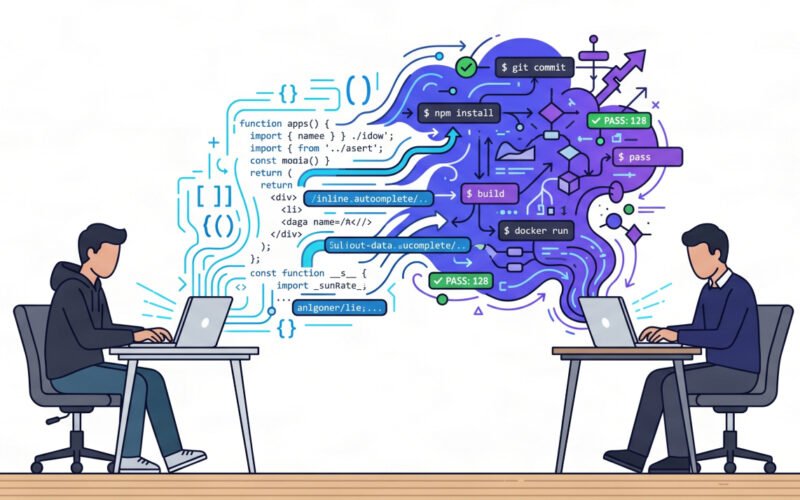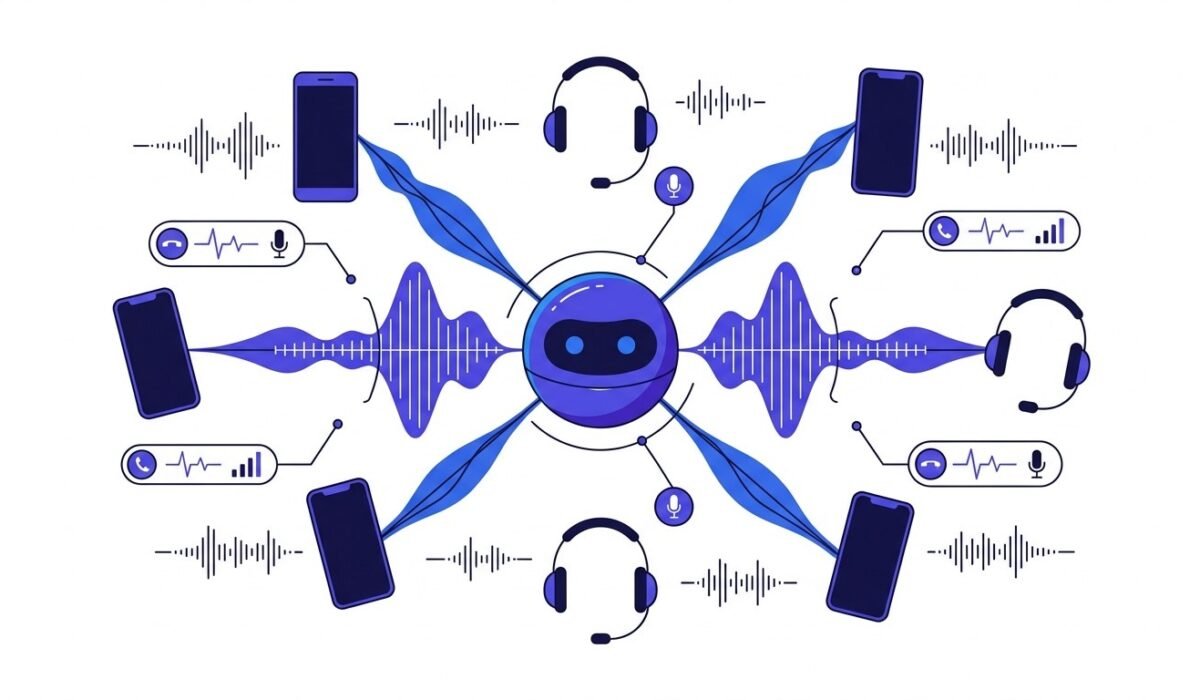
AI cold calling uses voice AI agents (like Air AI, Bland AI, and Vapi) to make outbound sales calls, qualify leads, and book meetings automatically. These tools speak naturally, handle objections, and update CRM records in real time. In 2026, top-performing teams using AI cold calling report 3x more dials per day and 40% lower cost per appointment than human-only SDR teams. Setup requires a voice AI platform, a telephony number, and a trained call script.
Cold calling has been declared dead roughly 200 times over the past decade. And yet, in 2026, it is quietly making a comeback — powered by AI voice agents that never get tired, never go off-script, and never take a lunch break.
Companies running AI cold calling today are dialing 10x more prospects per day than their human SDR teams. The ones doing it well are booking more qualified meetings at a fraction of the cost. The ones doing it poorly are burning leads and getting flagged as spam.
This guide tells you exactly how it works, which tools are worth your time, and how to set up your first AI cold calling campaign without wasting a week on trial and error.
Summary at a glance
- ✓
Top Platforms: Bland AI, Air AI, Vapi, and Retell AI are the leading AI cold calling tools in 2026, with pricing from $0.09 to $0.45 per minute. - ✓
Performance Lift: AI dialers make 300-500 calls per day vs. 80-120 for a human SDR, with 40% lower cost per meeting when set up correctly. - ✓
Legal Requirements: FTC and FCC regulations require proper disclosure and opt-out mechanisms for AI voice calls in the US — skipping this gets you fined. - ✓
Best Use Case: AI cold calling works best for outbound appointment setting, not closing. Human handoff at the demo stage is still essential.
What Is AI Cold Calling?
AI cold calling means using a voice AI agent to make outbound phone calls on your behalf. The agent speaks naturally, listens to responses, handles objections, and either books a meeting or ends the call gracefully. All of it happens without a human on the line.
These are not the robocalls of 2015. The newer systems use large language models with real-time speech synthesis. Latency is now under 800ms on the best platforms, meaning the pause between your prospect’s sentence and the AI response is barely perceptible.
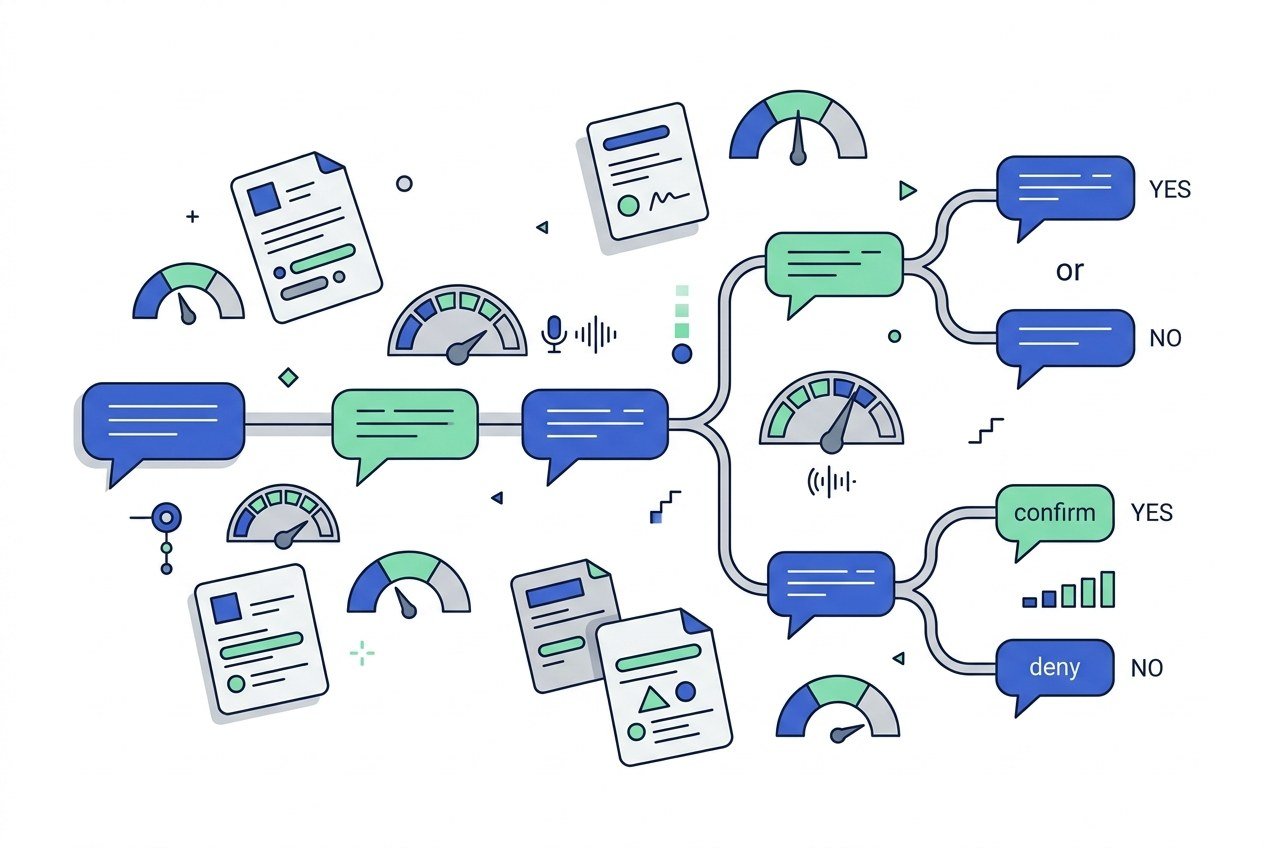
A well-configured AI agent can introduce your product, ask qualifying questions, respond to “I’m busy right now,” and push toward a calendar booking — all in one call. When the prospect agrees, it instantly fires a calendar invite via Calendly or a HubSpot integration.
Top AI Cold Calling Tools in 2026
The market has consolidated fast. Four platforms now work at scale, plus a handful of niche options for specific use cases.
| Platform | Price / Min | Best For | CRM Integration |
|---|---|---|---|
| Bland AI | $0.09 | High-volume outbound, agencies | HubSpot, Salesforce, Zapier |
| Air AI | $0.11 | Long-form conversations, enterprise | Native CRM + webhooks |
| Vapi | $0.05 + LLM cost | Developers, custom voice pipelines | Full API, any CRM via code |
| Retell AI | $0.07 | Small teams, quick deployment | Zapier, GoHighLevel |
| Synthflow | $0.13 | Real estate, insurance verticals | GHL, Salesforce |
Bland AI is currently the most popular choice for outbound agencies because of its low per-minute cost and reliable uptime. At $0.09/min, a 3-minute call costs $0.27. Running 300 calls per day costs roughly $81 in API fees alone.
Vapi is the developer’s pick. You bring your own LLM (GPT-4o, Claude 3.5), your own voice (ElevenLabs or Deepgram), and pay only for infrastructure. It requires coding knowledge but gives maximum flexibility.
How AI Cold Calling Actually Works (The Tech Stack)
Three layers work together in every AI cold calling system:
1. Telephony Layer: The platform needs a phone number to dial from. Most tools integrate with Twilio or Vonage to provision local numbers. Local numbers have significantly higher answer rates than toll-free lines — typically 22% vs. 8%.
2. Conversation Layer: This is the LLM handling dialogue. When your prospect says something unexpected, the model generates a contextual response in under a second. The quality of this layer determines whether calls feel natural or robotic.
3. Action Layer: When the call reaches a positive outcome (prospect agrees to a meeting), the system triggers an action: send a calendar link, create a CRM contact, log the call transcript, fire a Slack notification to the sales rep. This automation is what makes the ROI work.
Setting Up Your First AI Cold Calling Campaign
Here is a practical setup sequence that takes 4-6 hours on your first run:
Step 1: Pick your platform. For most people starting out, Bland AI or Retell AI is the right call. Both have no-code campaign builders. Create an account, verify your business, and provision a local phone number in your target area code.
Step 2: Write your call script. Keep the opener under 15 words. State your name, your company, and one specific reason for calling. The AI will handle variations, but it needs a clear base script to work from. Write out objection responses for the top 5 pushbacks: “Not interested,” “We already have something,” “Send me an email,” “Who gave you my number,” and “Call me back later.”
Step 3: Build your lead list. AI cold calling only works with accurate contact data. Use Apollo.io, Clay, or ZoomInfo to pull verified mobile numbers. Calling landlines or bad numbers burns money and tanks your connect rate. Target a minimum 85% number accuracy before launching.
Step 4: Configure CRM handoffs. Every booked meeting should auto-create a deal in your CRM. Tag and suppress every disconnected or unqualified call from future outreach. This keeps your list clean and your pipeline accurate. Tools like Zapier connect most AI calling platforms to HubSpot or Salesforce in under 20 minutes.
Step 5: Run a 50-call test. Never launch at full volume until you have tested with 50 calls. Listen to 10 recordings, check hang-up points, measure answer rate, and refine the script. Most issues surface in the first opener line or the first major objection response.
Legal Requirements You Cannot Skip
The FCC updated its AI robocall rules in February 2024. Using an AI voice to cold call without proper disclosure is now explicitly illegal under the Telephone Consumer Protection Act (TCPA). The fine is up to $1,500 per call — not per campaign, per individual call.
The minimum compliance requirements for US outbound AI calls:
- Your agent must identify itself as an AI at the start of the call if asked directly.
- You must provide a clear opt-out mechanism (“Press 2 to be removed from our list”).
- You cannot call numbers on the Do Not Call Registry unless you have prior written consent.
- Business-to-business calls have slightly more flexibility, but still require an opt-out path.
Work with a platform that handles DNC scrubbing automatically. Bland AI and Retell both have built-in DNC list checking. If your platform does not, run your list through a service like DNC.com before every campaign launch.
What Conversion Rates Actually Look Like
Realistic benchmarks, not the numbers in vendor pitch decks:
- Answer rate: 15-25% on a fresh list with local numbers. Falls to 8-12% after 2 touches.
- Qualified conversation rate: 30-45% of answered calls last more than 60 seconds.
- Meeting book rate: 2-6% of all dials booked as a meeting. Top performers hit 8%.
- Cost per booked meeting: $12-$40 including platform fees, lead data, and telephony. Human SDR equivalent is typically $60-$120.
If you are hitting below 1.5% meeting book rate after 500 calls, the problem is almost always the lead list quality or the opener, not the AI platform itself. Check your number accuracy first, then audit the first 10 seconds of your script.
For more ways to build scalable online income systems, browse the Make Money Online hub or the full AI Tools guide library.
FAQ: AI Cold Calling
Is AI cold calling legal in 2026?
Yes, with proper disclosures. Under FCC rules updated in 2024, AI voice agents can make outbound calls but must offer an opt-out option and cannot impersonate a human when directly asked. Business-to-business calls face fewer restrictions than consumer calls. Always scrub lists against the National Do Not Call Registry.
What is the best AI cold calling tool for beginners?
Bland AI and Retell AI are the easiest to start with. Both have drag-and-drop campaign builders, don’t require coding, and include DNC scrubbing. Retell AI’s free trial lets you test 20 minutes of calls before paying anything.
How much does AI cold calling cost per month?
For a small campaign of 200 calls per day (roughly 600 minutes of connected talk time), expect to spend $150-$300/month in platform fees plus $100-$200 for lead data. Enterprise teams running 2,000+ daily dials budget $2,000-$5,000/month total.
Can AI cold calling replace human sales reps?
For the top-of-funnel prospecting and appointment setting stage, largely yes. For discovery calls, demos, and closing, no. The best-performing teams use AI for initial outreach and qualify-to-book, then hand off to a human for every substantive sales conversation.
How do I get leads for AI cold calling?
Apollo.io, Clay, and ZoomInfo are the top sources for verified B2B contact data with mobile numbers. For B2C, data providers like InfoUSA and DataAxle work well. Always verify number accuracy before loading into your campaign. Aim for 85% or higher verified mobile coverage.
The Bottom Line
AI cold calling is not a silver bullet, but it is a genuine competitive advantage for teams that set it up right. The platforms have matured. The voice quality is no longer the problem it was two years ago. The real work is in the script, the lead data, and the handoff process to human reps.
Start with a 50-call test on Bland AI or Retell AI. Listen to the recordings yourself. Fix what is not working. Then scale. Most teams see a positive ROI within 30 days once the script is dialed in.
If you want more tools and income strategies in your stack, check the full AI Tools category for updated reviews and comparisons published weekly.