
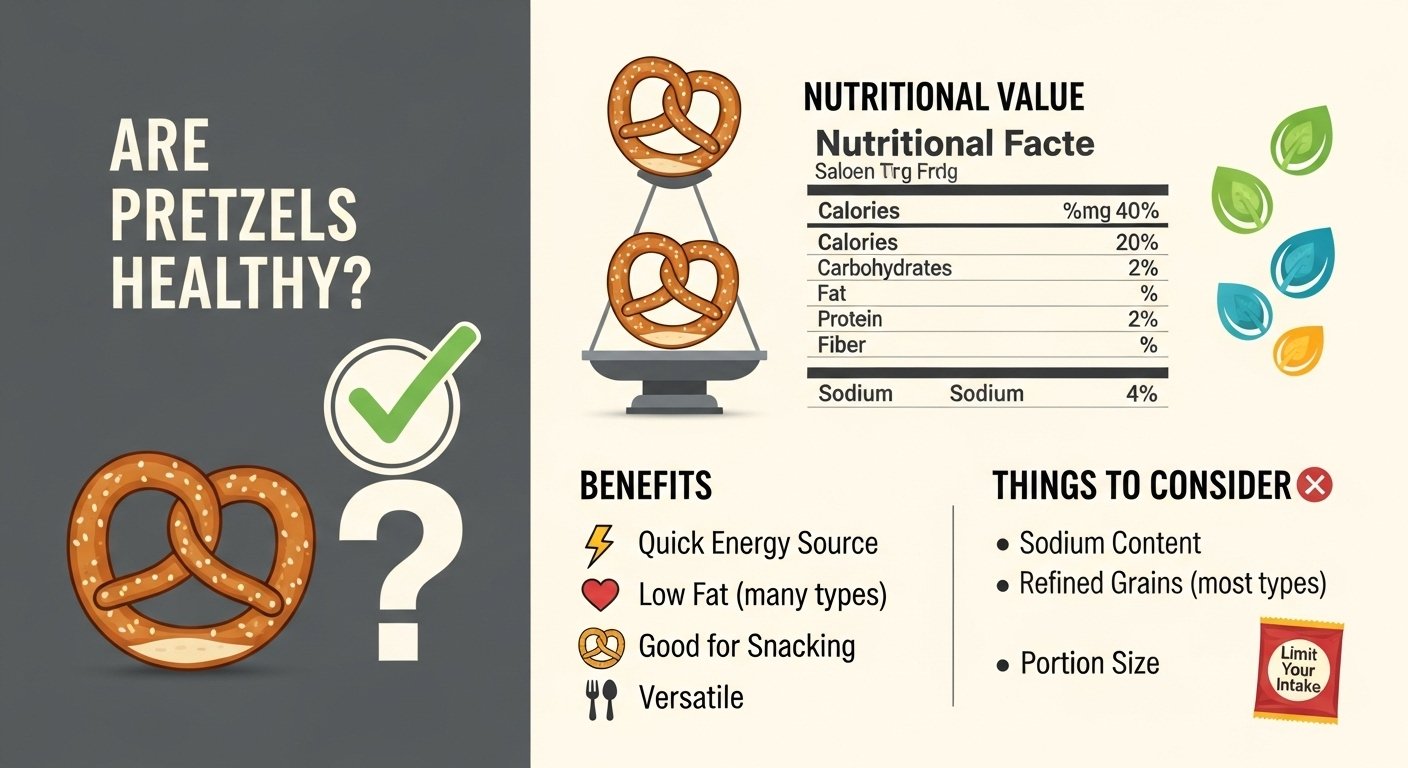
Pretzels have long been a popular snack in many cultures around the world. Whether enjoyed at a sporting event, paired with a cold drink, or simply as a quick snack on the go, pretzels are a delicious and convenient choice. But the question remains: Are pretzels healthy?
In this article, we’ll explore the nutritional value of pretzels, their health benefits and drawbacks, and whether they can be part of a balanced diet. We’ll also provide some tips on how to make pretzels a healthier snack choice. Let’s dive into the world of pretzels and see whether they deserve a place in your healthy eating plan.
What Are Pretzels Made Of?
Pretzels are traditionally made from a simple combination of flour, water, yeast, salt, and sometimes sugar. They are usually baked in the shape of a twisted knot or stick, giving them their signature look. Pretzels can be found in various forms, such as hard pretzels, soft pretzels, and even pretzel crisps.
Ingredients Breakdown:
Flour: The main ingredient in pretzels, usually refined white flour, which provides carbohydrates for energy.
Yeast: Used to make the dough rise, giving pretzels their airy texture.
Salt: Provides flavor, but also contributes to the sodium content of the snack.
Sugar: Sometimes added in small amounts to help activate the yeast and add a slight sweetness to the dough.
Other Additives: In some commercial pretzels, preservatives and artificial flavorings may be added to prolong shelf life and enhance taste.
While the basic ingredients of pretzels are quite simple, the nutritional content can vary depending on the specific recipe and preparation method. Let’s take a closer look at how pretzels measure up nutritionally.
Nutritional Value of Pretzels
To understand whether pretzels are a healthy choice, we need to evaluate their nutritional profile. Here’s an overview of the typical nutritional values for a standard serving of pretzels (about 1 ounce or 28 grams):
Calories: Around 100-110 calories per ounce (1 ounce = about 4-5 pretzel sticks)
Carbohydrates: 22-24 grams
Protein: 2-3 grams
Fat: 0-1 gram (mostly minimal fat)
Fiber: 1-2 grams
Sodium: 200-300 mg (depends on the amount of salt used)
Sugar: 0-2 grams
Pros of Pretzels:
Low in Fat: Most pretzels, especially the hard variety, are low in fat, making them a relatively low-calorie option compared to many other snack foods.
Low in Sugar: Pretzels are typically low in sugar, especially compared to sweet snacks, which makes them a better option for those trying to reduce sugar intake.
Carbohydrate Source: The high carbohydrate content in pretzels provides quick energy, which can be beneficial during physical activity or as a light snack.
Cons of Pretzels:
High in Sodium: One of the main drawbacks of pretzels is their high sodium content. While salt is necessary for flavor, it can contribute to high blood pressure and other health issues when consumed in excess. A single serving of pretzels can contain about 10% of the recommended daily intake of sodium.
Low in Nutrients: While pretzels provide some carbohydrates and a small amount of protein, they are not particularly rich in vitamins, minerals, or other essential nutrients. As such, they should not be relied on as a primary source of nutrition.
Refined Carbs: Most pretzels are made with refined flour, which means they have a high glycemic index. This can cause blood sugar spikes, which may be a concern for individuals with diabetes or those trying to manage blood sugar levels.
Are Soft Pretzels Healthier Than Hard Pretzels?
Soft pretzels and hard pretzels are often compared when discussing their health benefits. While both are made from similar ingredients, there are some key differences between the two:
Texture and Preparation: Soft pretzels are larger and typically served fresh, while hard pretzels are smaller and are often packaged for long-term storage.
Calories and Fat: Soft pretzels tend to have a slightly higher calorie and fat content due to their larger size and the addition of butter or oil in the preparation process. On average, a soft pretzel can contain around 200-400 calories, depending on the size.
Sodium: Both soft and hard pretzels are high in sodium, but soft pretzels may have even more sodium due to the salt coating added during preparation.
Serving Size: A serving of soft pretzels is usually much larger than a serving of hard pretzels, meaning you’re more likely to consume more calories and sodium with soft pretzels.
Are Pretzels Good for Weight Loss?
Pretzels can be a good snack choice if you’re looking to lose weight, but only in moderation. Here’s why:
Low in Calories: A serving of pretzels typically contains fewer than 150 calories, making it a relatively low-calorie snack option. However, eating multiple servings can quickly add up in terms of calories.
Portion Control: Because pretzels are often sold in pre-portioned bags, it’s easier to avoid overeating. However, it’s important to be mindful of the sodium content if you’re trying to maintain a low-sodium diet.
Pretzels may be a good choice when compared to other snacks like chips or cookies, which can be higher in calories, fat, and sugar. However, they should not be the primary snack for weight loss. It’s important to balance your diet with other nutrient-dense foods like fruits, vegetables, and lean proteins.
Healthier Alternatives to Traditional Pretzels
If you’re looking to make your pretzel snack healthier, here are some ideas to consider:
Whole Wheat Pretzels: Opt for whole wheat pretzels instead of the traditional refined flour versions. Whole wheat pretzels provide more fiber, which can help with digestion and make you feel fuller for longer.
Baked, Not Fried: Always choose baked pretzels over fried versions to reduce fat content.
Low-Sodium Pretzels: Look for pretzels with reduced sodium or unsalted varieties. This can help lower your sodium intake while still allowing you to enjoy the crunchy snack.
Homemade Pretzels: Making pretzels at home allows you to control the ingredients, including using healthier flour, reducing salt, and limiting added sugars and fats.
Pair with Protein or Fiber: Instead of eating pretzels on their own, pair them with a protein or fiber source, such as a boiled egg, a piece of cheese, or hummus. This can help balance the snack and make it more satisfying.
Conclusion: Are Pretzels Healthy?
The healthiness of pretzels largely depends on the type, serving size, and how they are incorporated into your overall diet. While they can be a low-fat, low-sugar snack, they are often high in sodium and provide limited nutritional value. Pretzels can certainly fit into a balanced diet, but they should be eaten in moderation, especially if you are concerned about sodium intake or blood sugar levels.
To make pretzels a healthier snack, opt for whole grain versions, watch portion sizes, and try pairing them with protein-rich or fiber-rich foods.
